
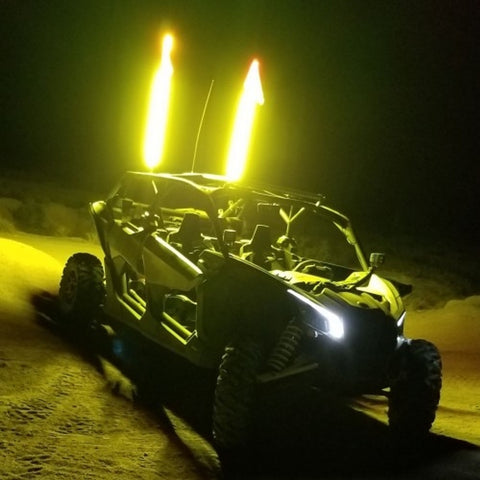
Best UTV Light Ba...
Sep 18, 2026

If you're shopping for a UTV windshield, the first real decision you'll run into isn't the brand or the mount style - it's the material. Glass and polycarbonate each have real trade-offs, and picking the wrong one for how you actually ride can mean dealing with scratches, cracks, or unnecessary weight for years. This guide breaks down the actual differences so you can make the call with confidence instead of just going with whatever's cheapest in the listing.
This comparison is based on how each material actually holds up in daily riding conditions, not just how it looks new in a product photo.
A windshield takes more abuse than almost any other accessory on a UTV - constant exposure to dust, rocks, branches, and UV, all while you need to see clearly through it at speed. The material determines how well it holds up to all of that, and the two dominant options, laminated safety glass and polycarbonate (often called Lexan), perform very differently depending on what you're asking of them.
Pros: Laminated safety glass offers the clearest, most distortion-free view of any windshield material, closely matching what you'd expect from an automotive windshield. It also resists scratching far better than polycarbonate, so it tends to stay looking new for longer with normal use. Glass doesn't yellow or haze over time from UV exposure the way lower-quality plastics can.
Cons: Glass is heavier, which matters more on machines already carrying a lot of accessory weight. It's also more prone to cracking or shattering on a hard impact - a rock kicked up at speed or a branch strike can crack glass in a way that a polycarbonate windshield would simply flex around. Glass windshields also tend to cost more than comparable polycarbonate options.
Pros: Polycarbonate is significantly more impact-resistant than glass - this is the same category of material used in bulletproof glass and safety equipment, so it handles rock strikes and branch contact without shattering. It's also considerably lighter, which is a real advantage if you're trying to keep weight down on a machine already loaded with other accessories. Polycarbonate windshields are generally more affordable than glass equivalents.
Cons: The main trade-off is scratch resistance. Standard polycarbonate scratches more easily than glass, though most quality windshields now come with a scratch-resistant or anti-scratch coating that closes much of that gap. Over time and without careful cleaning, polycarbonate can also develop a slight haze, particularly on lower-quality or uncoated options.
Choose glass if: you prioritize optical clarity above all else, you ride mostly on trails or roads with less risk of rock strikes and branch impacts, and you don't mind the added weight and cost for a windshield that resists scratching long-term.
Choose polycarbonate if: you ride technical or rocky terrain where impact resistance matters more than perfect clarity, you want to save weight, or you're looking for a more budget-friendly option that still performs well with a quality scratch-resistant coating.
For most UTV owners riding a mix of trails, work terrain, and the occasional rocky stretch, polycarbonate tends to be the more practical choice - the impact resistance alone prevents the kind of damage that ends a glass windshield's life early. Riders who mostly stick to smoother trails and prioritize a crystal-clear view often find the trade-off to glass worthwhile.
Beyond material, coverage is the other major decision. A full windshield covers the entire front opening and offers the most complete protection from wind, dust, and debris - the better choice for cold weather or dusty conditions. A half windshield covers only the lower portion, letting more airflow into the cab while still blocking debris kicked up from the trail ahead. Some riders keep a half windshield mounted for warm-weather riding and switch to a full windshield for colder months.
Scratch-resistant coating - especially important on polycarbonate, since this single feature does the most to close the durability gap with glass
Mounting hardware - look for a tool-free or quick-release mounting system if you plan to remove the windshield seasonally
Tint options - some riders prefer a light tint to reduce glare, though this is a personal preference rather than a durability factor
Vent options - a windshield with a built-in vent panel allows airflow control without needing to remove the entire windshield
Thickness - thicker material (typically measured in fractions of an inch) generally holds up better to impact regardless of whether you choose glass or polycarbonate
Windshields are built to match specific cage and cab dimensions, so fitment varies by make, model, and often by whether you're running a factory or aftermarket roof. Always confirm the windshield is listed for your exact model and configuration before ordering, since even small dimensional differences can leave gaps that let in wind and dust.
Clean the mounting surface thoroughly before installation to ensure a proper seal
Avoid over-tightening mounting hardware, which can create stress points that lead to cracking over time, especially with glass
Clean polycarbonate windshields with a microfiber cloth and a plastic-safe cleaner - standard glass cleaner can degrade some scratch-resistant coatings over time
Inspect mounting hardware periodically for looseness from vibration on rough terrain
Neither is universally better - it depends on how you ride. Polycarbonate is the more practical choice for technical or rocky terrain where impact resistance matters most, while glass suits riders prioritizing optical clarity and long-term scratch resistance on smoother terrain.
Standard polycarbonate scratches more easily than glass, but most quality windshields include a scratch-resistant coating that significantly closes that gap. Always check whether a coating is included before buying.
Yes, many riders do exactly this - running a half windshield in summer for better airflow and switching to a full windshield for winter's added wind and weather protection.
Polycarbonate windshields are generally more affordable than glass, though pricing varies by brand, thickness, and coating quality. Investing in a scratch-resistant coating tends to pay off over the windshield's lifespan rather than needing early replacement.
Choosing between glass and polycarbonate for a UTV windshield comes down to being honest about the terrain you actually ride and what matters more to you - optical clarity and scratch resistance, or impact resistance and lighter weight. Both materials perform well when matched to the right riding style, and a quality scratch-resistant coating makes polycarbonate a strong all-around choice for most owners.
Browse our full UTV windshield collection to find the right material and fit for your machine.

Sep 18, 2026

Sep 16, 2026

Sep 12, 2026
